⚡️ 1-Minute DISCO Download
Ediscovery is a sophisticated workflow combining human expertise and agentic AI to extract critical facts from massive corporate datasets. To win in modern litigation, legal teams must trace custodians across decentralized chat apps, navigate strict state and global data privacy laws, demand visually threaded production formats, and incorporate early case review into the standard Electronic Discovery Reference Model (EDRM).
📊 Key Statistic: Agentic AI tools now execute first-pass review on up to 32,000 documents per hour, slashing manual timelines from weeks to hours.
🥽 Dive Deeper: For a blueprint on beating tactical traps, jump down to the sections on “Privilege logs and FRE 502 clawbacks” and “Third-party subpoenas.” They break down the procedural shields and technological ammunition attorneys need to shut down overly broad discovery requests at the outset of litigation.
Annual enterprise litigation spending has surged to exceed $360 billion, and discovery alone now accounts for more than half of total litigation costs.
Modern business has changed, and with it, ediscovery best practices.
This guide outlines the rules underlying ediscovery today, plus how to navigate new technology and ever-proliferating forms of electronically stored information (ESI). You’ll walk away with an understanding of the major considerations, challenges, and best practices for modern litigation.
Rules governing ediscovery
With virtually all business conducted across decentralized, multimodal platforms, ediscovery has become a sophisticated workflow that combines human expertise and advanced, agentic artificial intelligence to identify, review, and extract critical facts from massive, chaotic datasets.
While the framework for ediscovery remains rooted in the Federal Rules of Civil Procedure (FRCP), the way courts apply these rules has shifted to address the realities of modern data storage and communication.
Proportionality and early case strategy under Rule 26
Under Rule 26(f), parties must establish a discovery plan detailing the preservation and production format of ESI early in a case. But teams must only produce relevant, nonprivileged information proportional to the needs of the case, and they are explicitly protected from producing data that is "not reasonably accessible because of undue burden or cost."
Today, teams leverage early case assessment (ECA) technology to argue proportionality, using AI sampling and data visualization to prove how burdensome a broad request will be before official review begins.
Form of production and specific objections under Rule 34
Rule 34 allows requesting parties to specify the format of produced ESI, which may include TIFFs, PDFs, and JSON files. But since raw code from collaboration platforms is functionally useless, teams must explicitly demand that messaging data be produced in a visually threaded, continuous chat format to preserve context.
On the defense side, Rule 34 strictly prohibits boilerplate objections. Simply claiming a request is "overly broad and unduly burdensome" is widely rejected. Teams must specify the portion of a request they object to and provide specific, data-backed reasoning.
Discover how it works: Read DISCO's guide to Mastering Mobile Data for Ediscovery to see how modern platforms convert raw, fragmented chat exports into readable, visually threaded conversations.
The spoliation trap under Rule 37(e)
Rule 37(e) establishes the framework for spoliation sanctions when ESI is lost because an organization failed to take reasonable preservation steps. If the loss prejudices the opposing party — or worse, if a party acted with intent to deprive — courts can issue severe sanctions ranging from adverse inferences to default judgments.
Today, this is one of the most heavily litigated ediscovery rules due to the rise of ephemeral messaging. Courts routinely punish organizations that fail to force custodians to suspend auto-delete policies on their apps the moment litigation is anticipated.
Read the case study: Learn how DISCO forensic experts debunked alleged spoliation claims.
Ediscovery best practices and procedures
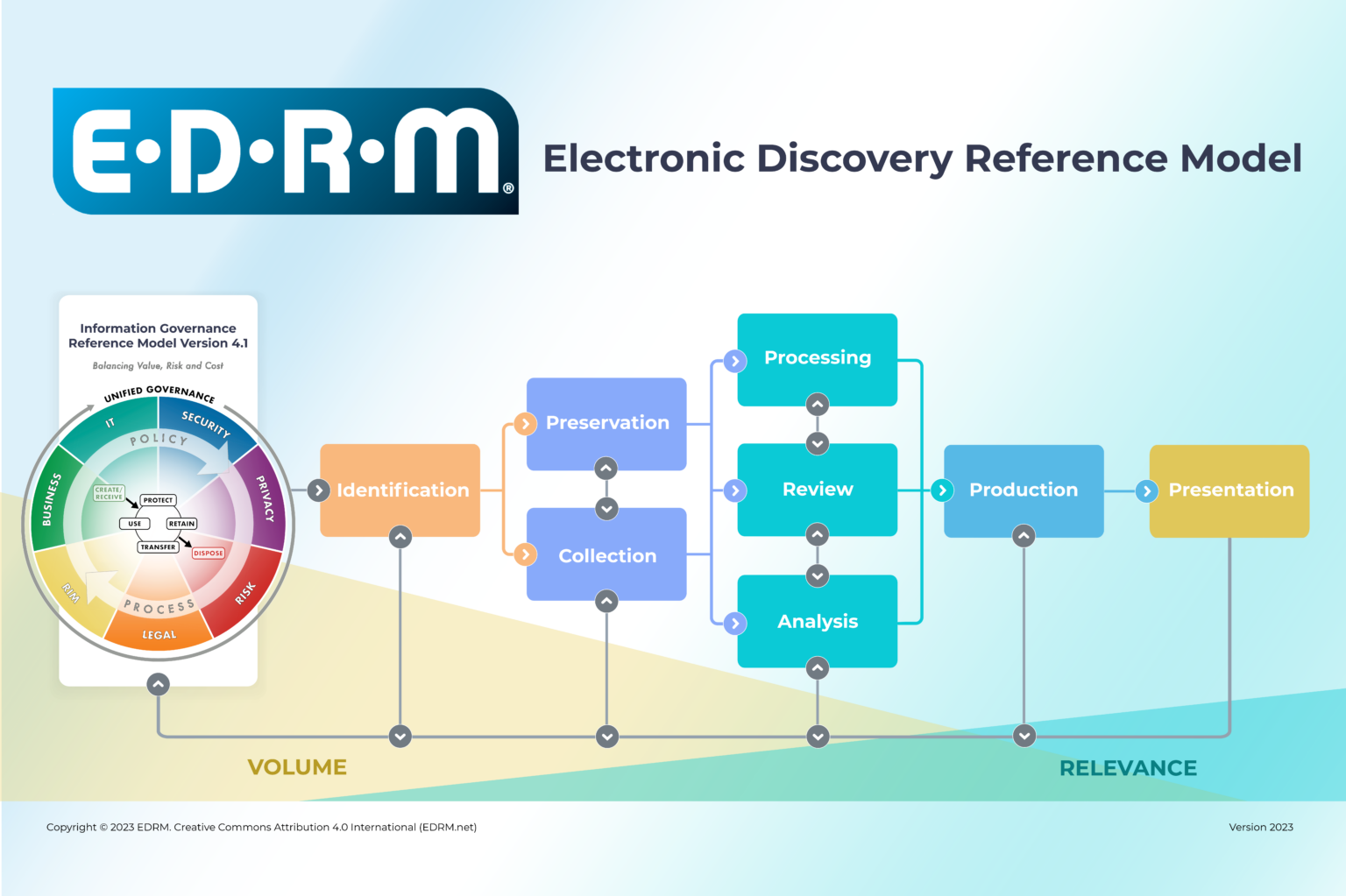
Since 2005, the Electronic Discovery Reference Model (EDRM) has offered a structured framework to reduce data volumes, control costs, and mitigate legal risk throughout the lifecycle of a case. While those core phases remain the standard, modern data volumes have forced the workflow to evolve.
In modern practice, ECA has evolved into its own distinct, critical phase. Because data volumes are so massive today, teams use dedicated ECA software modules (like DISCO’s ECA) after processing and before review to visually cull junk data, test keywords, and estimate costs. If teams wait until the traditional Review or Analysis phases to do this, they have already spent too much money hosting and processing data.
Step 1 – Identification
The identification phase involves locating potential sources of ESI relevant to the case. Teams collaborate with IT professionals to determine where data exists so they can map cloud infrastructure, SaaS applications, mobile device management (MDM) protocols, and third-party data repositories.
Step 2 – Preservation
Once relevant ESI sources are identified, preservation ensures this information is protected from alteration or destruction. When legal holds are issued, organizations can lock data within platforms to prevent accidental or intentional deletion. Simultaneously, the formal legal hold notice explicitly instructs custodians to turn off disappearing message settings on their mobile devices.
Step 3 – Collection
Collection involves gathering data while maintaining strict chain-of-custody and forensic integrity. Modern collections often use targeted API pulls from cloud platforms rather than imaging entire hard drives, ensuring only potentially relevant data is ingested and minimizing privacy risks.
Did you know? DISCO provides a full suite of forensic services. Our pressure-tested processes remove unnecessary delays and allow teams to start their review quickly.
Step 4 – Processing
Processing converts raw, collected data into reviewable formats. This phase includes deduplication, extracting text and metadata, and, crucially, reconstructing complex data structures — like mobile chat logs and Slack threads — into readable formats.
DISCO was custom-built for modern data types. Its integrated AI and analytics tools can reduce document population sizes up to 50%. Learn more.
Step 4b – Early case assessment
Before full review begins, early case assessment allows teams to rapidly explore the dataset. Using data clustering and visual analytics, attorneys can quickly cull irrelevant data and identify key players and case themes.
Step 5 – Review
During review, teams evaluate millions of multi-channel files for relevance and privilege. Today, agentic AI tools like DISCO Auto Review can handle first-pass review by analyzing up to 32,000 documents per hour. The software automatically categorizes files, flags privileged communications, and provides natural-language justifications for every suggestion, collapsing weeks of traditional manual review into a matter of hours.
Read the case study. Learn how global law firm Kennedys Law LLP completed a review of 1.4 million documents in less than four weeks.
Step 6 – Analysis
Analysis is an ongoing process of evaluating documents to discern patterns and develop case strategy. Modern platforms allow attorneys to query their case database using natural language to find specific facts, timelines, and communications, bringing the most critical elements to the surface instantly.
With Cecilia Q&A, teams can interrogate their evidence — literally — with AI-powered legal case analysis software. Learn more.
Steps 7 and 8 – Production and presentation
In the final phases of ediscovery, non-privileged relevant documents are formatted according to agreed-upon standards and shared with opposing counsel. This ESI is presented in depositions or trial settings using dynamic timelines and digital demonstratives.
Expanding sources of ESI
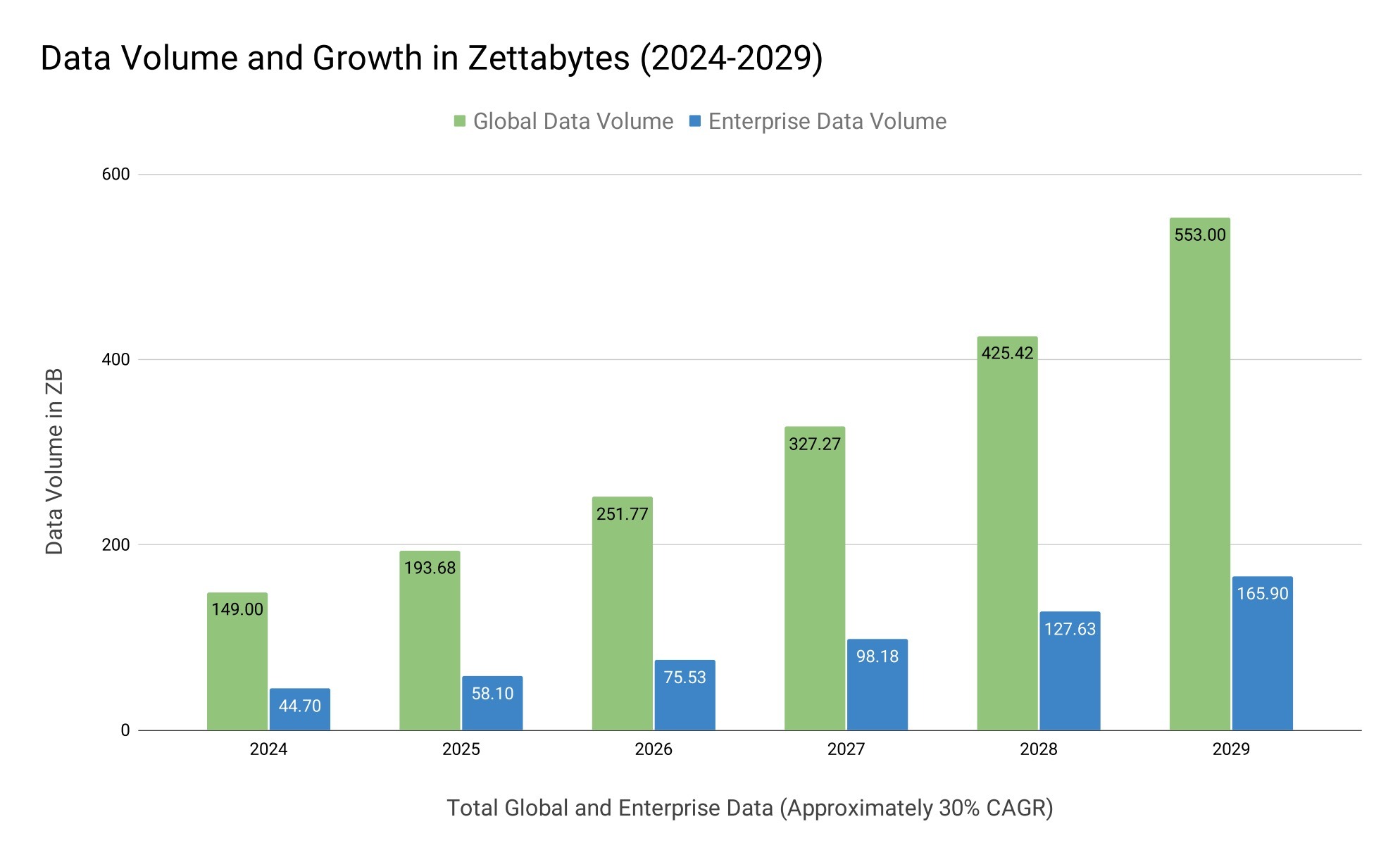
Global data volumes are projected to explode from 149 zettabytes to 553 zettabytes by 2029 — a staggering 30% compound annual growth rate. Because of this data surge, standard litigation time-to-close is steadily climbing.
When discovery requests arrive, knowing exactly who and what is involved makes all the difference. Teams must think creatively about where modern evidence lives.
Get the ebook: The Legal Hold Playbook
A custodian is anyone with access to relevant information. While executives and project leads are the obvious targets, teams must look deeper into the organization depending on the matter. Because the definition of a "document" has expanded exponentially, discovery plans must trace these custodians across:
- Collaboration and chat applications: Apps like Teams, Slack, and Zoom are continuous, informal, and heavily reliant on emojis, reactions, and hyperlinks. Capturing this context is vital.
- Ephemeral and short-form messaging: Executives often move sensitive conversations to encrypted apps like WhatsApp, SMS, or Signal. Tracking the existence of these apps on company-issued devices is critical.
- AI-generated content and workplace tools: The prompts employees feed into AI copilots and shared workspace tools like Miro — as well as the outputs generated — are highly contested ESI. If an employee uses an internal LLM to summarize a confidential client meeting, the generated summary and the prompt used to create it are both discoverable.
- Videoconferencing: Discovery now routinely includes video meetings and virtual conferencing, the associated chat transcripts, and automated AI meeting summaries.
- The Internet of Things (IoT): IoT data provides concrete metadata about where a custodian was and what they were doing at a specific time.
Common ediscovery challenges
Even with the best procedures in place, teams must navigate complex legal and technical hurdles.
The shift from data volume to data diversity
Industry data shows that while data volume is a major headache, data diversity — specifically managing enterprise collaboration apps like Slack,Teams, and Zoom, and AI-generated datasets — is the single biggest challenge facing legal teams.
A recent benchmark report found that organizations now actively juggle an average of 10 separate collaboration platforms per matter. Not only is the pile of data bigger, the data is scattered across entirely different types of dynamic, conversational software.
Ephemeral messaging and auto-delete features
Ephemeral apps are designed to destroy data, which means they clash directly with the duty to preserve evidence. If a company reasonably anticipates litigation, it must take proactive steps to halt the destruction of ESI.
Attorneys must interview custodians specifically about their use of non-standard messaging apps and secure those devices immediately to ensure their preservation efforts remain beyond reproach.
Privilege logs and FRE 502 clawbacks
Massive volumes of modern data make it difficult to create traditional, itemized privilege logs. To streamline this process, teams should negotiate categorical privilege logs that allow them to group withheld documents into clear, recognizable categories.
To mitigate the heightened risk of inadvertent disclosure, securing a Federal Rule of Evidence 502(d) clawback order at the outset of litigation is vital. A 502(d) order ensures that accidentally producing a privileged file does not result in a devastating subject-matter waiver, protecting the organization even if massive review volumes lead to an oversight.
Third-party subpoenas under Rule 45
Because much of today’s ESI is hosted by third-party SaaS and cloud vendors, teams must first determine if a litigant legally controls that data through their service contract before jumping to an outside request.
When a third-party subpoena is necessary under Rule 45, specificity is critical. The issuing party must narrowly tailor the request to avoid undue burden and be prepared to coordinate production formats and costs directly with the vendor.
Data privacy and cross-border discovery
With nearly two dozen U.S. states enacting comprehensive data privacy laws alongside global standards like the GDPR and EU AI Act, teams must carefully balance the broad scope of U.S. discovery against strict statutory privacy rights. Managing multi-state or international custodians escalates the risk of a compliance violation.
Automated tools like DISCO can identify and redact personally identifiable information (PII) before any data is produced.
Selecting tools for ediscovery
Generative AI offers incredible opportunities to save attorneys' hours and reduce client costs, but organizations need the right infrastructure to support it. When considering an ediscovery platform, look for:
- Agentic AI: Avoid platforms that have simply bolted on a chatbot. Look for solutions in which agentic AI and generative AI are deeply integrated into the review process, capable of zero-shot classification, automated deposition summaries, and complex fact-finding.
- Advanced message threading: The platform must upload and ingest native files from modern collaboration tools, rendering them visually as continuous, easy-to-read chat logs rather than fragmented individual documents.
- All-in-one functionality: Fragmenting workflows across multiple vendors introduces security risks and data transfer delays. Look for a single provider with expertise across the entire EDRM lifecycle.
- User-friendliness: Search visualizations and platform features must be intuitive. The technology should empower the legal team as well as technical specialists.
While there are many legal and logistical challenges in managing modern ESI, it is entirely possible to streamline the process and right-size workflows to fit any litigation needs.
Do better ediscovery with DISCO
DISCO’s award-winning ediscovery solution has been changing the game for firms and corporate legal departments since 2012 — and it is built specifically for the realities of modern data.
Between Cecilia AI’s generative capabilities, Auto Review’s zero-shot classification capabilities, seamless integration with Timelines, Deposition Management software, and sophisticated handling of chat data, the secure DISCO platform transforms weeks of manual work into mere minutes.
It helps teams get to the facts faster, cull irrelevant data smarter, and understand the case deeper — so practitioners can focus on actually practicing law.
For more information on streamlining the ediscovery process, request a demo today.


.webp)